Your Trash Day, Water Rate and Permit Fee Can All Change Quietly. Five Things to Check
Local services change by resolution, insert and route map revision, rarely by letter. Five documents and settings that let a household catch the change before the bill does.
Pinned by Ravi Chandrasekar4 min read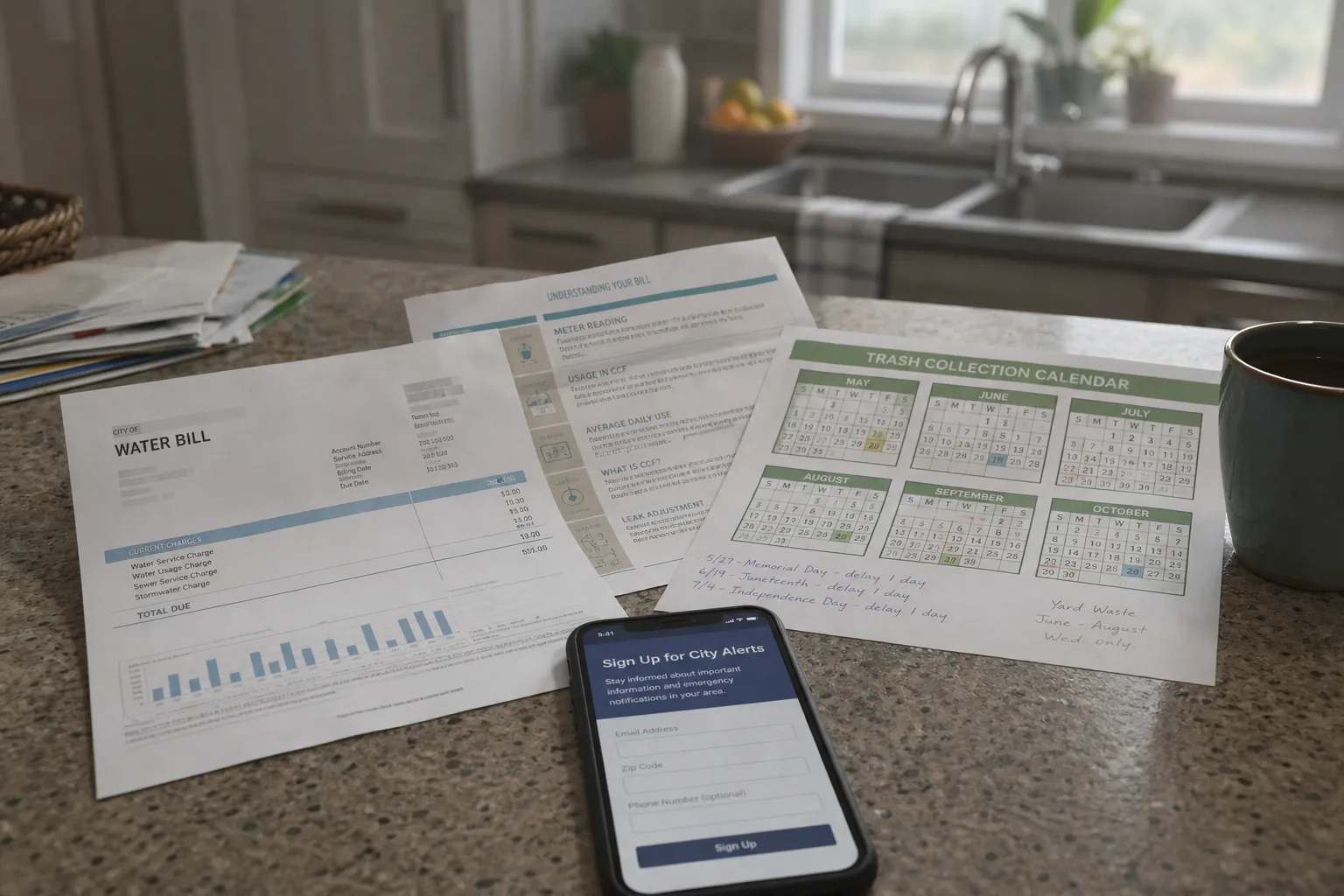 A kitchen counter with a municipal water bill, a folded utility insert, a printed trash collection calendar with handwritten notes, and a phone showing a cit...
A municipal service rarely changes with a letter addressed to you. It changes when a council adopts a resolution on a Tuesday evening, when a hauler's contract renews with a new route map, or when a rate study finishes and the tiers shift by a few cents per thousand gallons. The household finds out later, usually through a bill that runs high or a cart left at the curb past noon. The change was recorded. It was simply recorded somewhere other than your mailbox, and knowing which four or five places those are turns a surprise into a calendar entry.
1. The master fee schedule, which is one document and covers almost everything
Most cities and counties adopt a single master fee schedule, usually by resolution, usually once a year alongside the budget. It sets the building permit fee, the plan review fee, the residential parking permit, the bulk item charge, the re-inspection fee and the penalty for a missed appointment, all in one place. It is the document that answers why a permit that cost one figure two summers ago costs more now. Find the current version, note its adoption date, and save the file rather than the link, because links to prior years quietly stop resolving once a new schedule replaces them.
The useful habit is comparing two adjacent years side by side rather than reading the current one alone. A fee that rose by a small percentage is a rate adjustment. A fee that appeared for the first time, or one that split into a base charge plus a per-unit charge, is a scope change, and scope changes are what land on a household as an unexpected line. Ask who requested it, which department sponsored the item, and whether it applies at application or at issuance, because that timing decides whether your pending project is billed at the old number or the new one.
2. The bill insert and the line items behind the total
Water, sewer and stormwater bills carry the most quiet change per square inch of any document a household receives. Rates move in tiers, so a fixed base charge can hold steady while the volumetric rate above a threshold climbs, and the household that waters a lawn in August feels it while the neighbor who does not never notices. Read the line items, not the total. The Environmental Protection Agency oversees drinking water standards nationally, but the price, the tier breakpoints and the stormwater fee tied to your impervious surface are all set locally, and they are usually explained in the insert that arrives folded behind the return envelope.
Keep twelve months of bills, either paper in a folder or PDFs in one directory named for the utility. When a bill jumps, you want to compare gallons to gallons and rate to rate across the same season a year earlier, which is the comparison that separates a leak from a rate change from a billing cycle that ran thirty-six days instead of thirty. That distinction determines who you call and what you ask for. A leak is a plumber. A rate change is a budget conversation. A long cycle is a clerical adjustment the utility can usually make on the phone.
3. The notification settings you actually control
Nearly every municipality now runs some form of subscription alert service, often branded as notify-me or e-notify, that lets a resident pick categories: agendas, bid postings, collection delays, water main work, street sweeping, emergency alerts. Sign up for the narrow categories rather than all of them, because a household that subscribes to everything unsubscribes within a month. Agendas and solid waste notices are the two that pay for themselves. Then verify the mailing address the city and the county assessor have on file, since a forwarded address from a move three years ago is a common reason a household misses every notice the town did send.
Check the same thing on the utility account and the trash account separately, because they are frequently different systems maintained by different offices, and one may be under a prior owner's name if you bought the house rather than built it. Add the phone number that receives texts, not the landline. Confirm the email address is one a person reads, not an old provider account kept for logins.
4. The route map, the calendar and their revision dates
Collection days, street sweeping schedules, snow routes and permit parking zones all live on maps and calendars that get republished without fanfare, often with a small revision date in a corner. That date is the thing to record. When a hauler's contract renews or a district is redrawn, your Thursday can become a Monday, and the set-out time can tighten from seven in the morning to six. Print the current calendar, write the revision date on it, and put it where the carts are stored rather than in a drawer with the appliance manuals.
Parking and sweeping changes carry citations, which makes them the most expensive of the quiet changes per incident. If a sign appeared on your block, photograph it with the date, because temporary signage is sometimes the only notice a block receives and it does not stay up.
5. The one-page household record that ends the dispute
Keep a single running page, digital or paper, with the date, the department, the name of the person you spoke with, the reference number and what was promised. When a fee is charged that you believe was waived, or a cart is skipped that you believe was scheduled, that page is what converts a frustrating call into a five-minute correction. If the answer is disputed, every state has a public records law, and a short written request naming the document, the adopting body and the date range usually produces the resolution or the contract amendment within days.
File the result with the fee schedule and the bills. The next change will come from the same three or four places, and by then you will know where to look first.
Posted under Public Policy