Three Cleaning Jobs, One Crossed a Federal Line. What the Paperwork Had to Show
A spring maintenance list on a 1954 duplex ran into lead rules, a stormwater ordinance and two towns with opposite answers, and the record is what settled it.
Pinned by Josephine Lachance4 min read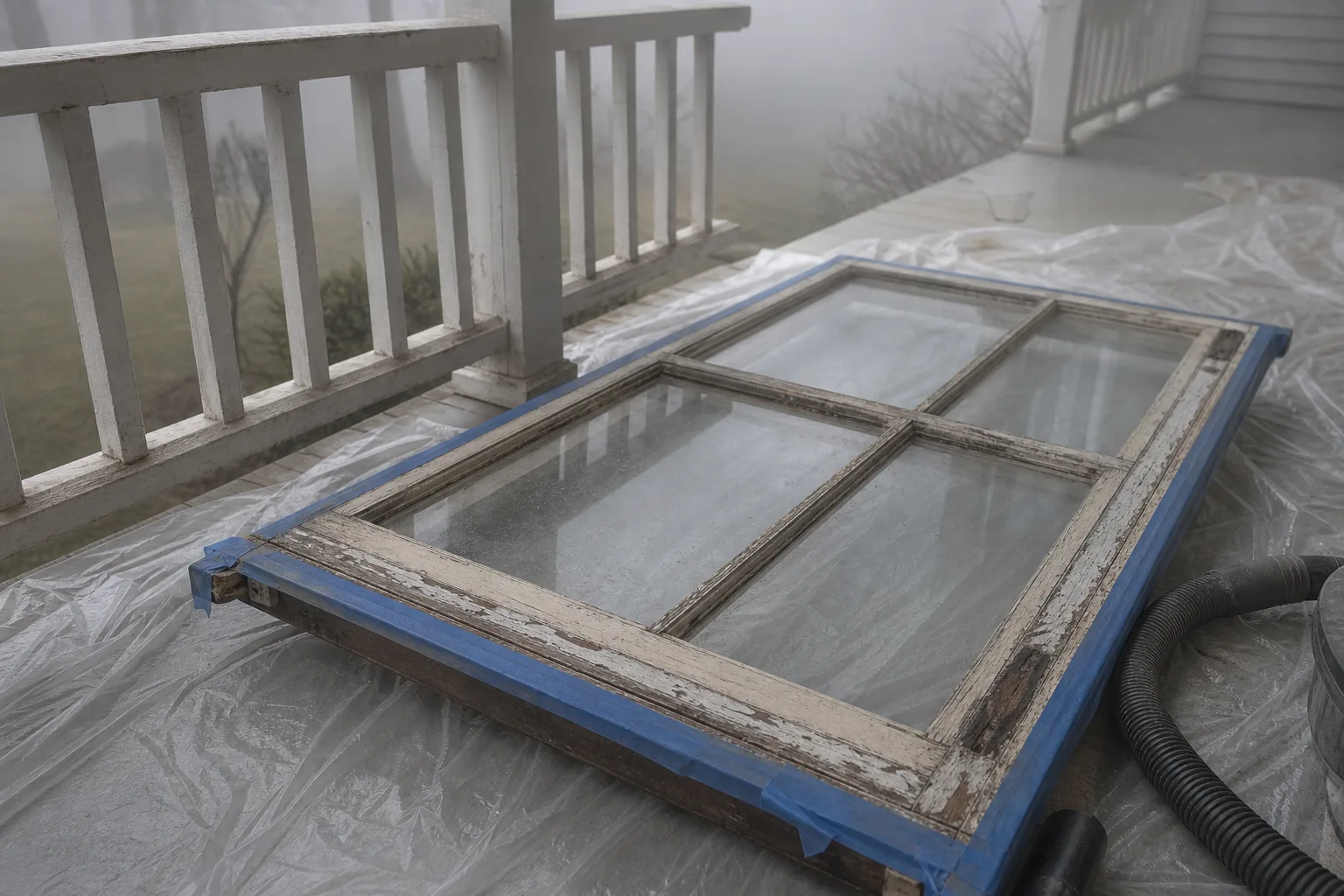 A wooden double-hung window sash removed from an older house, resting on plastic sheeting on a porch, with masking tape along the frame edge and a HEPA vacuu...
The owner of a 1954 duplex put out three jobs in the same week last spring: gutters cleared and resealed at the joints, the siding and walkways washed, and the paint stripped from eleven window sashes on the street side before repainting. She treated all three as maintenance, priced them the same way, and expected the only real variable to be scheduling. Two of the three were exactly that. The third turned out to sit inside a federal rule, and the difference between the two bidders on it was not skill, or even price, but whether either of them was permitted to do the work at all.
The job that was not a cleaning job
Stripping paint from a window sash in a house built before 1978 disturbs a painted surface, and that puts it under the federal lead renovation, repair and painting requirements the Environmental Protection Agency is responsible for administering. The agency's remit here covers who may perform the work, how the area is contained, and how it is cleaned afterward. One bidder described sanding the sashes on sawhorses in the driveway and sweeping up. The other named a firm certification number in the estimate, described plastic sheeting and a HEPA vacuum, and priced the cleanup as a separate line. The gap between those two documents was the whole story.
She asked both for the certification in writing rather than over the phone. The first bidder did not answer the email, which is itself a record. The second replied with the firm certification and the name of the certified renovator who would be on site, and that reply went into a folder with the estimate. Where a rule attaches to a job, the proof that the rule was met has to exist on paper before the crew arrives, because after the fact there is nothing left to inspect but a repainted sash.
Two towns, one hose, opposite answers
The washing quote came from a company that works across a county line, and its standard method was to let the runoff find the nearest drain. In the town where the duplex sits, the municipal stormwater ordinance treats a storm drain as a direct line to the creek and prohibits discharging wash water containing detergents or paint residue into it. Four miles away, in the next town, the same crew had spent the previous morning doing precisely that without issue. Local rule, not federal rule, decided the method, and the company's own price sheet had no line for it.
The fix was small once it was identified: block the drain inlet, direct the flow to a vegetated area, and dispose of what collected. It added an hour and a modest amount to the invoice. What it avoided was a code enforcement complaint from a neighbor with a clear view of the driveway, which would have arrived with the owner's name on it rather than the contractor's, because the property owner is generally the party the town writes to.
What the lead-safe firm had to leave behind
Certified work on pre-1978 housing generates its own paper. Before the sashes were touched, the firm gave her the required lead hazard information pamphlet and had her sign an acknowledgment, and because the second unit is rented, the same delivery had to reach the tenant. At the end, the renovator performed and documented a cleaning verification, wiping the sills and floors and comparing the cloths against the card. She photographed each signed page with her phone the day it was handed over, which cost nothing and meant the record no longer depended on a folder surviving a move.
The firm is required to retain those records for three years. Homeowners are not required to retain anything, which is exactly why they should. A buyer's inspector, an insurer after a claim, or a tenant's attorney will ask what was done to the painted surfaces of a house of that age, and the useful answer is a dated set of documents rather than a recollection of a careful crew.
Where the state line moves the requirement
The federal rule is a floor. Several states run their own authorized lead programs and set requirements above it, with separate licensing categories for the people who do the work and additional obligations that attach to rental units, particularly where a young child lives in the building. A landlord in one of those states can be subject to inspection and certification duties that a landlord across the border, doing identical work on an identical building, never encounters. The lesson from this case was not that the rules are onerous. It is that the rules are local, and that the bidder who already knows which set applies is the one worth hiring.
What she wrote down while the work was happening
Her running record was short and took minutes a day. Dated photographs of each area before work started, including the driveway and the drain inlet. The certification numbers and the renovator's name, copied into an email to herself. A one-line note each evening naming what was done and by whom. Every change to scope confirmed by email the same day, in plain language, with the price attached. When the invoice arrived with the containment and disposal lines on it, there was nothing to dispute, because both had been agreed in writing on the morning they were added.
The gutters, in the end, were the simplest of the three and the only one she could have done herself. The other two were worth paying for because each carried a rule she would have had to learn, follow and prove, and the people she hired already had the certification, the containment plan and the disposal method built into how they price a day's work.
Posted under Property