Ten Years Ago You Brought a Box of Paper. Now the Records Expire First
Preparation for a first legal consultation used to be a sorting problem; now it is a retrieval problem, and the calendar month you book decides what you can still download.
Pinned by Ravi Chandrasekar4 min read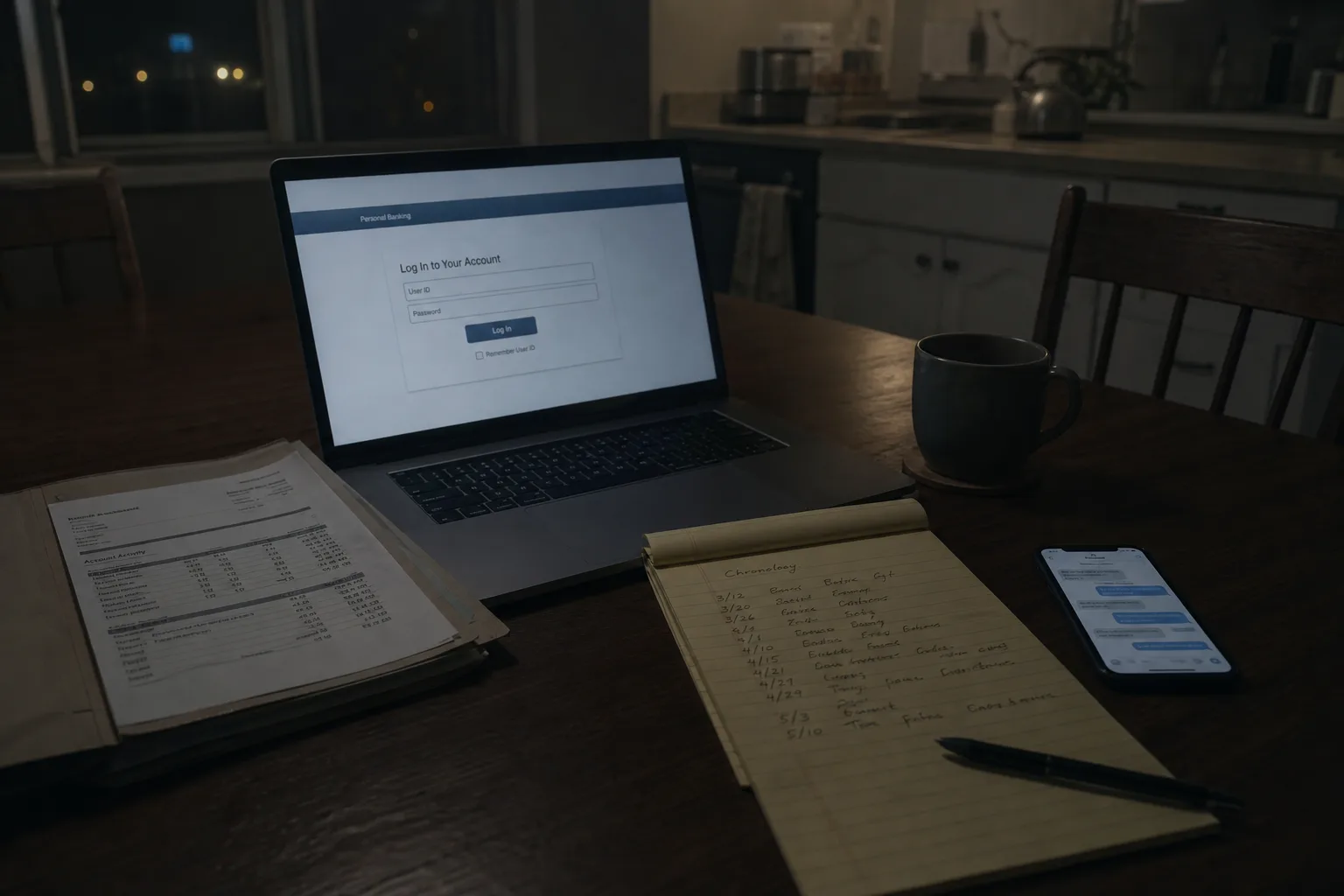 A kitchen table at night with a laptop open to a bank account login screen, beside a thin folder of printed statements, a legal pad with a handwritten chrono...
The paid hour starts on schedule whether or not you found the lease, the settlement statement, or the message thread where the contractor agreed to the change. Ten years ago the common failure was volume: people arrived with a banker's box, and half the hour went to sorting. The failure now is access. The documents exist, somewhere, inside portals you no longer have a password for, behind retention windows that quietly close, in apps that purge threads after a year. Preparation has shifted from carrying paper into a room to recovering records before they stop being available.
The week before the meeting, ten years apart
The old version of that week was physical and tedious in a way that at least told you where you stood. You emptied a drawer onto the dining table, found the closing packet, made photocopies at the office, and arrived with a stack that was too thick but complete. The current version is three evenings of password resets. You request a statement archive from one bank, discover another holds only two years online, email a former employer's benefits administrator, and screenshot a text thread because the app does not export. None of it looks like preparation while you are doing it, and all of it is.
Why the month you book in decides what you can still pull
Records arrive and disappear on a calendar, and the month of your first meeting changes how much of the file assembles itself. Late January and February hand you a packet of year-end documents without asking: W-2s, 1099s, mortgage interest statements, brokerage summaries, annual escrow analyses. Book in those weeks and a dispute over income, basis, or a loan balance is half documented by the mail. Book in July and you are reconstructing the same year from a portal that shows the last eighteen months. The Consumer Financial Protection Bureau oversees how consumer financial products handle account records, and the practical point for you is simpler: download the statement while the institution still displays it.
Seasonal timing cuts the other way too. A contract dispute from a spring remodel is best brought to an attorney while the crew's texts, the change order emails, and the inspection notes are still inside the apps that hold them. Insurance renewal packets land once a year and contain the declarations page that an adjuster question will turn on. If you leave a job, the benefits portal and the payroll system often close to you within weeks, so the week of a resignation is the week to export. A meeting in October about something that happened in April costs more because the April record takes work to retrieve.
The intake questionnaire moved the work, and the bill followed it
Ten years ago the first meeting began with the attorney asking what happened and writing it down. Now a form arrives days ahead, asking for dates, names of opposing parties, amounts in dispute, and uploads. That form is not an administrative courtesy; it is the point where the work of assembling a file gets assigned. If you fill it in, the hour goes to analysis. If you leave it blank, the firm's staff do the gathering afterward at a paralegal rate, and the retainer draws down on tasks you could have done over two evenings. Read the engagement letter for the sentence that says which document collection is included and which is billed.
Ask directly what the consultation fee covers and what it does not, because the two are usually different sizes. A flat consult fee typically buys the meeting and an oral assessment; it rarely buys a written opinion, a demand letter, or a review of forty pages you hand over at the door. If you want the lease read line by line, say so when you book, so the time is scheduled and priced rather than discovered mid-hour. Firms are generally willing to quote that separately. The thing to avoid is the version where nobody named the extra and it appears on an invoice three weeks later.
The second problem you mention at minute fifty
Most scope growth in a legal matter is introduced by the client, late, and in good faith. You came about the boundary fence, and at minute fifty you mention that your mother's estate has a title question on the same parcel. That second matter is a different file, a different conflicts check, and often a different attorney in the firm. Raising it on the intake form instead means it is either folded into the same hour deliberately or scheduled as its own, with its own number attached. The question worth asking out loud is whether a new issue is inside the current engagement or outside it.
What you should walk out holding
A useful first meeting ends with three concrete things: the deadline that actually governs your situation, the next document to produce and who produces it, and the price of the next step stated as a figure or a rate with an estimate of hours. Write them down in the room. Then send a short email the same afternoon confirming your understanding, because a written record of the agreed scope on day one is what keeps month three honest. Attorneys generally welcome that note; it protects the file on both sides.
The preparation that pays is unglamorous and mostly happens before anyone is billing: a dated index of documents, a one-page chronology, and the specific question you want answered. Booked in the right month, with the year-end paperwork already in hand, that is an evening's work rather than a project.
Posted under Law & Legal