Shipping Your First Pallets? What Decides Who Pays When the Box Arrives Crushed
Carrier liability, packaging standards and the delivery receipt all decide damage claims before anyone opens the box. Here is what a first-time shipper should record.
Pinned by Josephine Lachance4 min read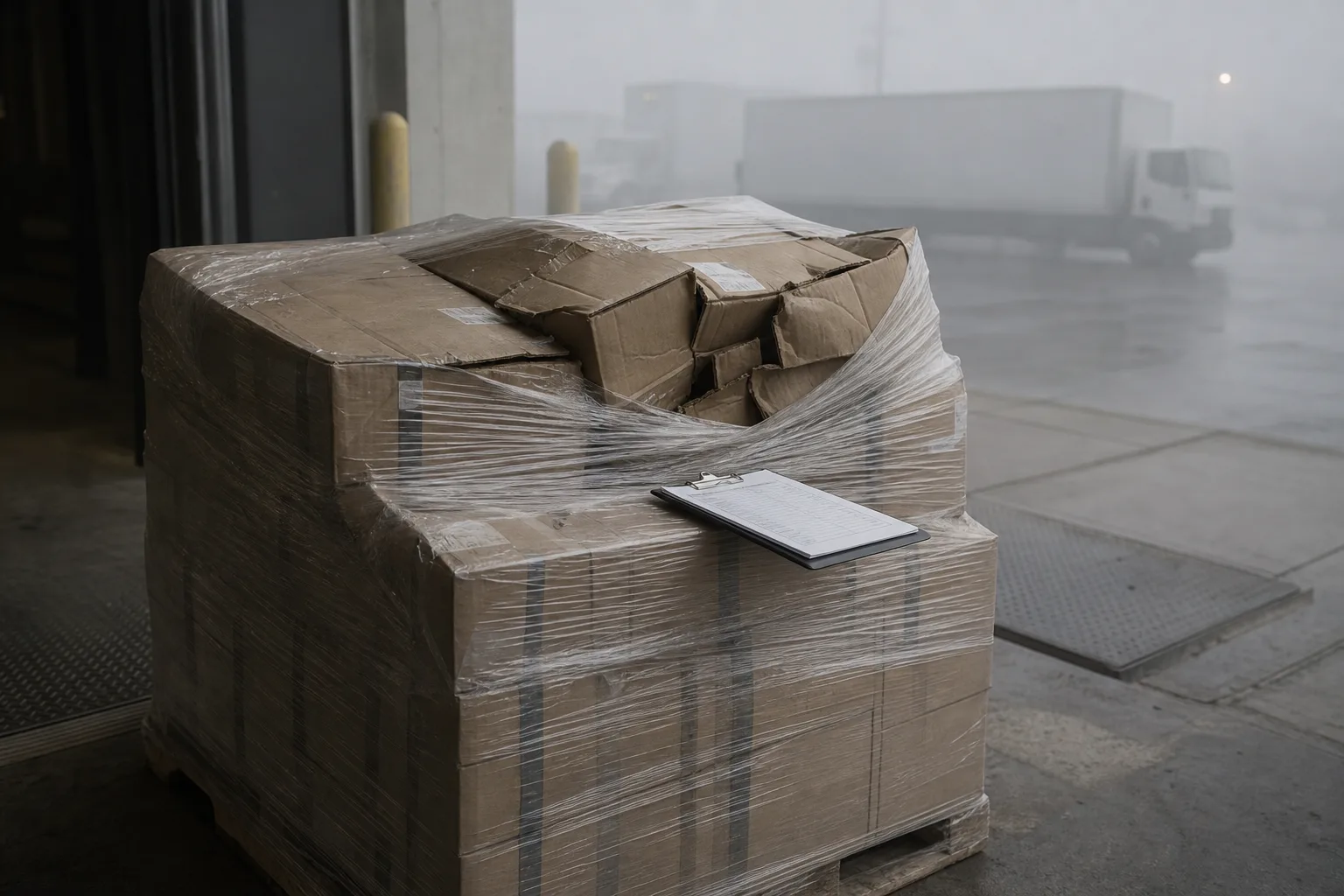 A shrink-wrapped pallet of cartons on a warehouse loading dock with visible crush damage to the top tier, a clipboard with a delivery receipt resting on the...
The first damaged shipment is rarely the one that teaches the lesson, because the first one gets absorbed, reshipped and forgotten. The second one, and the third, are when the pattern shows: the carrier is not refusing to pay because the goods arrived fine, but because the paperwork made at pickup and delivery does not support the claim being made weeks later. Almost every element that decides a freight damage claim is fixed before the truck leaves, in the terms you accepted, the packaging you chose, and the words written on the receipt.
The carrier is liable, but not for what you think it is worth
For interstate motor freight, carrier liability runs through the Carmack Amendment, which makes the carrier responsible for loss or damage occurring in its custody, subject to defenses and to the limits stated in its own tariff and rules. The practical effect for a first-time shipper is that liability is real but capped, usually by a released rate expressed in dollars per pound per package, and often varying by freight class and commodity. A pallet of light plastic housings can be worth several thousand dollars and weigh under a hundred pounds. At a released rate of a few dollars a pound, the maximum recovery is a fraction of the invoice. Declaring a higher value, or buying separate shipper's interest coverage, is a decision made at booking, not after.
Packaging is the defense the carrier reaches for first
Insufficient packaging is a recognized carrier defense, and it is the one that resolves the largest share of denied claims. Less-than-truckload freight moves under the National Motor Freight Classification, which sets packaging requirements by commodity: carton burst or edge crush ratings, minimum wall construction, palletization, banding, and how items may be stacked. Parcel carriers publish their own packaging guidelines in the terms you agree to at account opening. Behind both sit test protocols from ASTM International and the International Safe Transit Association, which subject a packed unit to drops, compression, vibration and, in some series, environmental conditioning. A supplier who tells you a carton is tested should be able to name the protocol and send the report. Ask for it in writing, and keep the message.
The distinction that matters most on the claim form is who packed the goods. When the shipper packs and the carrier only counts pieces, the bill of lading will say so, and the burden of showing the packaging was adequate lands on you. That burden is met with evidence created before the shipment left: photographs of the item in the carton with void fill visible, photographs of the sealed carton, photographs of the wrapped and banded pallet with the label facing out, and the carton certificate stamped on the flap. Five photographs per outbound pallet, filed by pro number, take under two minutes and settle arguments that otherwise run for months.
The delivery receipt is the document the claim is built on
A clean delivery receipt is close to fatal to a concealed damage claim. When the consignee signs without notation, the carrier has a signed statement that the freight arrived in apparent good order, and everything asserted afterward is contested. The instruction to give a receiving customer is narrow and specific: before signing, count the pieces, walk the pallet, and write on the receipt exactly what is visible, such as two cartons crushed on the top tier, shrink wrap torn on the north face, or pallet leaning and banding cut. Photograph the freight while it is still on the truck or immediately at the dock, with the trailer or the driver's paperwork in one frame. Then sign, note the exception, and keep a photograph of the signed receipt itself.
Concealed damage, discovered when the carton is opened days later, is still claimable, but it is claimed against a weaker record. The carriers generally require notice within a short window after delivery, commonly five days, and they will ask to inspect. Keep the carton, the void fill and the pallet exactly as they were until the inspection is released in writing. Discarding the packaging removes the only physical evidence that would have supported you.
The clock, and the correspondence that proves you met it
The Federal Motor Carrier Safety Administration oversees the processing of loss and damage claims by interstate motor carriers, and the framework sets a minimum window in which a claim may be filed, ordinarily at least nine months from delivery, along with periods in which the carrier must acknowledge the claim and then pay, decline or make a firm settlement offer. Nine months sounds generous and disappears quickly. File in writing, by email, with the pro number, the bill of lading, the commercial invoice showing the value claimed, the photographs, the signed delivery receipt with the exception, and a repair estimate or a statement that the goods are a total loss. Then keep every acknowledgment, adjuster name and file number in the same folder.
Send follow-ups in writing rather than calling, or call and follow with an email that recites what was said and asks for confirmation. A claim that has been acknowledged, documented and dated is a claim that gets resolved on the file, without anyone needing to remember a phone conversation from six weeks earlier.
Set the routine up before the first pallet goes out: a photograph standard, a receiving script for the consignee, a folder per pro number, and a decision about declared value made at booking rather than after a forklift finds a carton. The shipments that arrive intact cost nothing extra to document, and the one that does not will be settled from the record you already have.
Posted under Business & Trade