Planning Decision Landed? Four Ways to Respond, and What Each One Actually Reopens
The decision letter is not the end of the process, but the routes back into it differ sharply, and the one you pick is usually decided by a date you already have.
Pinned by Josephine Lachance5 min read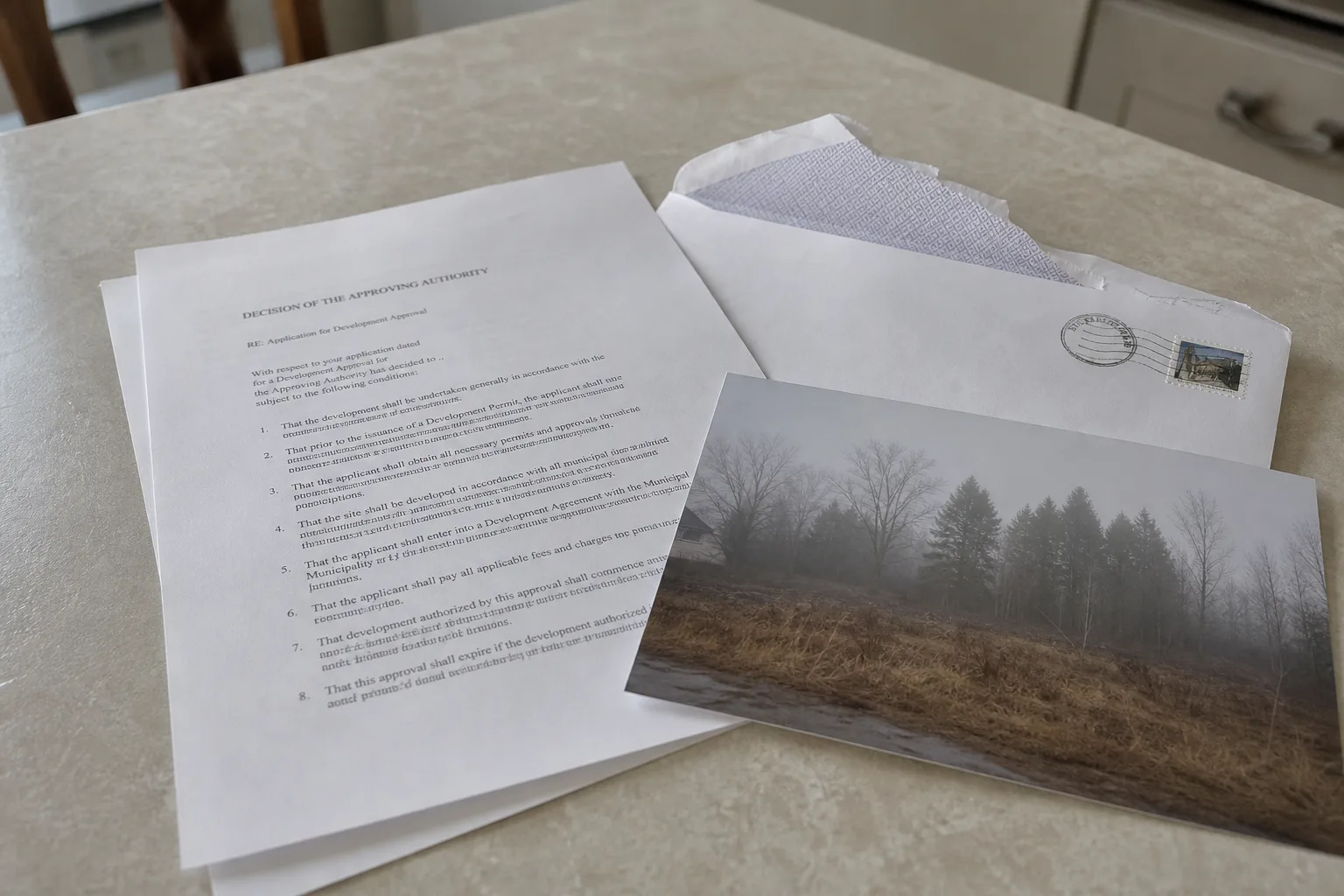 A municipal planning decision letter with a numbered conditions-of-approval page, an opened envelope showing a postmark, and a site photograph laid on a kitc...
The envelope arrives about two weeks after the hearing, or it arrives without a hearing at all, because the application was handled at staff level and nobody told you that was the plan. Inside is a decision letter, a page or two of findings, and a numbered list of conditions of approval. Most applicants read the first line, see the word approved, and file the rest. That last part is the expensive habit, because the conditions page is where the actual decision lives, and it is also where the only reversible parts of it sit.
The assumption that the decision is the verdict, and what it really is
People treat a planning decision the way they treat a court judgment: a winner, a loser, and a finished matter. What a local planning decision usually is instead is a set of instructions with a compliance schedule attached, issued by a body that retains authority over your project until the final inspection or the certificate of occupancy. An approval can carry thirty conditions, several of which cost real money, and a denial frequently names the specific deficiency that a revised application could cure. Neither document is the end of a conversation. Both start a clock.
From the applicant's side the confusion is understandable, because the letter is written for the file rather than for you. It recites findings in the language of the zoning code, references sections by number, and attaches conditions drafted by three different departments that never spoke to each other. The drainage condition came from public works, the tree replacement condition from the arborist, and the setback condition from the planner who wrote the staff report. When one of them contradicts another, and they do, that contradiction is yours to surface, in writing, before you start building to either one.
Four routes back into the decision, and what each one costs
The formal appeal is the loudest route and the narrowest. It moves the decision up one level, usually from staff to a planning commission or from a commission to the city council or a board of zoning appeals, and it runs on a short deadline counted in calendar days from the decision date. It carries a fee, sometimes a substantial one, and in many jurisdictions it reopens the whole approval rather than the single condition you dislike, which means a neighbor who was quiet at the hearing gets a second chance to speak.
The second route is a request to modify or delete a condition, handled administratively where the code allows minor amendments. It is cheaper, slower in calendar terms but faster in practice, and it does not put the rest of the approval at risk. The third is withdrawal and resubmission, which suits a denial that named a curable defect: you lose the fee and the queue position, but you keep the ability to redesign without arguing that the first decision was wrong. The fourth is compliance under written protest, which preserves nothing legally but preserves everything factually.
That fourth route deserves more respect than it gets. If a condition is ambiguous, and you comply with your best reading of it while sending the planner an email that states the reading you adopted and asks for correction, you have converted a future dispute about intent into a dated record of notice. Six months later, when a different reviewer says the condition meant something else, the email decides the argument. It costs nothing, it delays nothing, and it is the only one of the four routes available to you on a day when every deadline has already passed.
The dates that govern, and the one that does not
Appeal periods almost never run from the day you read the letter. They run from the date of the decision, the date of mailing, or the date the decision was filed with the clerk, and the difference between those three is frequently a week you did not know you had spent. Notice rules compound this. Many jurisdictions satisfy notice by mailing to owners within a fixed radius, posting a sign on the property, or publishing in a newspaper of record, and a neighbor who moved, rented out the house, or simply never opened the envelope has no remedy for having missed it.
So the first thing to write down is not your objection. It is the three candidate dates, taken off the face of the document, plus the postmark, photographed before the envelope goes in the recycling. Then call the planning department and ask one question: which date starts the appeal period under the code, and what section says so. Write the answer, the name of the person who gave it, and the time of the call. Staff answers are usually correct and almost never binding, which is exactly why the note matters more than the reassurance.
Building the record while the job is still running
Conditions are verified later by someone who was not there. That person will look at photographs, inspection cards, and correspondence, and will believe the ones with dates on them. Before the first machine arrives, photograph the existing grade, the trees marked for retention with their tags visible, the fence line, the sidewalk panels the city will later ask whether you cracked, and the neighbor's driveway. Shoot wide enough to show context and close enough to read a tag. Do it again at rough grade, at foundation, and at the point each numbered condition is satisfied, and name the files by condition number rather than by date.
Correspondence deserves the same discipline. Anything agreed on site with an inspector or a planner should be followed the same day by a short email that says what was agreed, what you understood you were permitted to do, and who was present, closing with a request to correct anything stated wrongly. Nobody ever replies to say it was right. The absence of a correction, sitting in a dated thread, does the work. Where a condition draws on an outside standard, such as floodplain elevation tied to the mapping program the Federal Emergency Management Agency is responsible for, note the map panel and effective date in the same message.
Where the customer's file changes the outcome
Appeals in most jurisdictions are decided on the record that existed below, which means the council or board is reviewing what the file contained on the day of the decision, not what you can explain at the podium. An applicant who submitted a written response to the staff report, attached dated site photographs, and put the arborist's letter in the record before the vote arrives at the appeal with evidence. An applicant who argued persuasively in person and submitted nothing arrives with a transcript of adjectives. The second one loses on paper having won in the room.
This is the practical answer to the question of which route to choose. The route is usually chosen for you by the strength of what you documented and the date on the letter, and both of those are settled long before you feel any urgency about them. The applicant who kept an ordered file has all four options open and can pick the cheapest one that works. That position is available to anyone willing to spend twenty minutes a week writing down what happened while it is still happening.
Open a folder the day you submit the application, not the day the decision arrives. Put the stamped submittal, every staff comment letter, the notice card from the mailbox, and the photographs in it, and keep a single running page of calls with names and times. When the conditions page turns out to matter, and it will, the work of answering it is already done.
Posted under Public Policy