Nobody Agreed to Run Forty Household Logins. Here Is Where That Job Quietly Grew
One person in most households ends up owning every login, every recovery code and every locked account, and the consequences show up in bills, refills and refunds long before a breach.
Pinned by Ravi Chandrasekar4 min read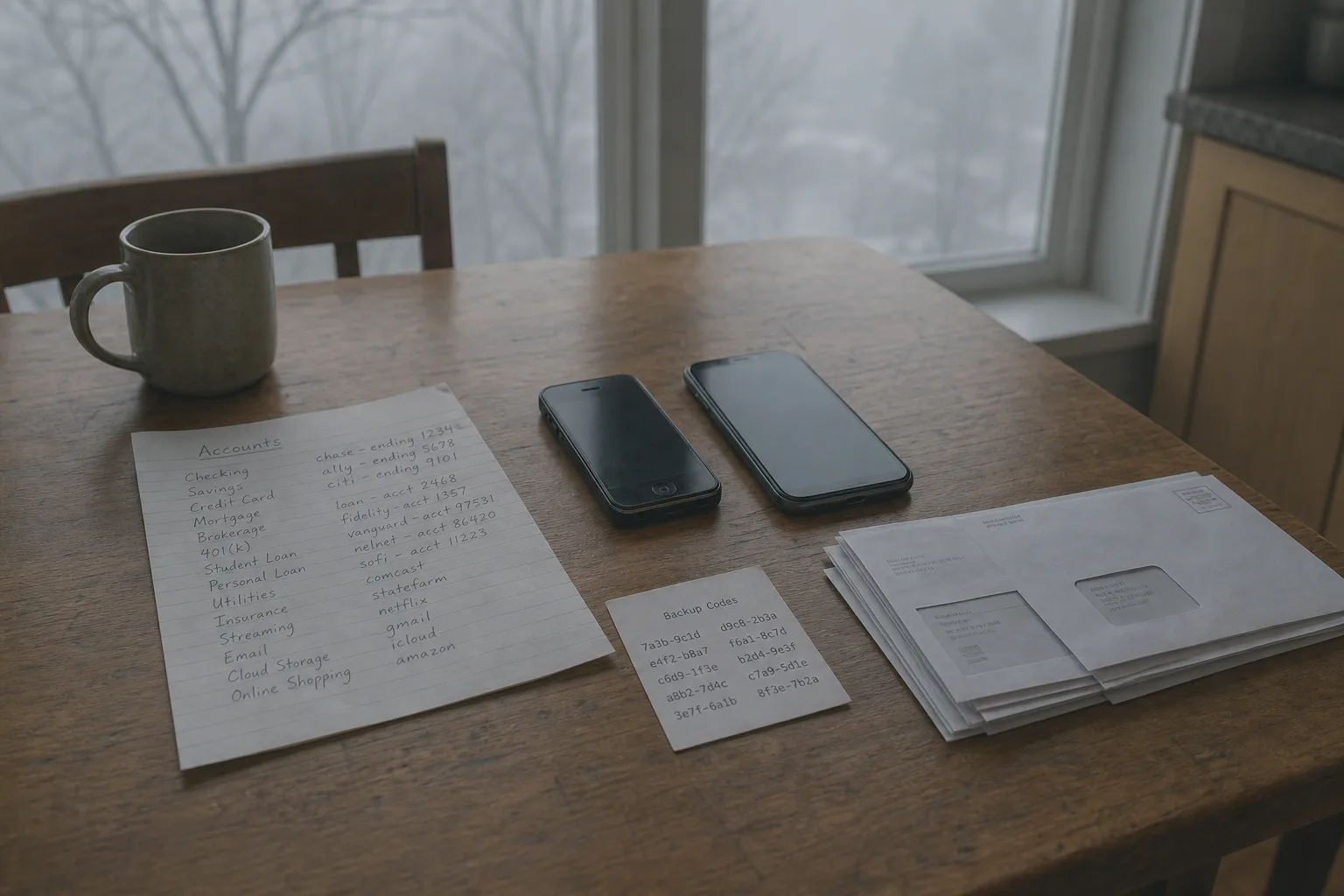 A kitchen table with a handwritten sheet listing account names, an older smartphone beside a newer one, a small printed sheet of backup codes, and a set of u...
In most households there is one person who knows the logins. It was never assigned, never discussed, and never reviewed. It started with the internet account, because somebody had to be on the phone with the provider, and then it absorbed the streaming subscriptions, the pharmacy portal, the utility autopay, the school lunch balance, the car's app, and the two-factor codes that arrive on one particular phone. The job grew by accretion. When it fails, it does not fail as a security incident; it fails as a missed refill, a shut-off notice, or a refund nobody can claim.
The administrator nobody appointed
Count the accounts a household actually runs and the number surprises people: forty is common, sixty is not unusual once you include the ones opened for a single purchase. Each one was created by whoever happened to be holding the phone that evening, using whatever email and whatever password felt convenient at the time. That is how one adult becomes the sole administrator of a shared infrastructure, holding recovery access to services the rest of the house depends on daily. The scope expanded; the arrangement never did. No one asked who pays when that person is in a hospital bed, traveling, or simply unreachable for three days.
The uncomfortable part is that the household cannot see the concentration until it is tested. A spouse can name the streaming password and not the email address the account was opened under, which is the credential that actually matters. Adult children can find the pharmacy app and not the phone number the verification text goes to. The password is the visible object, and the recovery path behind it is the real one. Fixing this is mostly clerical work, done once, on a quiet evening, and it is the single highest-value hour available to a household in this area.
The recovery chain breaks before the password does
Very few people are locked out because someone guessed a password. They are locked out because a phone number changed, an old work email was shut off when a job ended, an authenticator app lived on a phone that was traded in at the store, or the backup codes were printed and then filed somewhere nobody remembers. Every account has two doors, and households guard only one of them. The National Institute of Standards and Technology is the body responsible for federal digital identity guidance, and the direction of its recommendations has moved steadily toward treating recovery and authentication design as the substance of the problem rather than password trivia.
Treat a phone upgrade, a job change, or a new email address as an event with a follow-up list attached, because each of them silently invalidates recovery on accounts you will not touch for months. Before a device leaves the house, move the authenticator entries, export the codes, and confirm that at least one recovery method points somewhere the household will still control in five years. A second trusted contact on the important accounts costs nothing to add. The work is boring and it takes maybe ninety minutes, which is considerably less than the time a single locked account consumes on a support line.
Where the bill actually lands
The everyday consequences rarely get traced back to passwords, so they get absorbed as bad luck. A prescription refill lapses because the portal wanted a code sent to a retired number. An autopay card expires, the notice goes to an inbox no one opens, and a late fee arrives. A store credit sits unredeemed because the guest checkout email was a typo. A homeowners policy renews at a rate nobody reviewed, because the login belonged to the person who set it up in 2016. None of these read as security failures on the statement, and all of them are.
There is a heavier version. When someone dies or is hospitalized, the family discovers that photographs, financial records, and the utility accounts in the house's name are all behind credentials held by one person. Providers will often help, eventually, with documentation. Estates get settled without the logins. But the delay is measured in weeks at a point when weeks are expensive, and it is entirely avoidable by writing down where things live and who else can reach them.
What the advice now asks of you
The modern guidance is shorter and easier to follow than the rules most people were trained on. Length beats symbol substitution, so a long passphrase serves better than a mangled short word. Unique passwords matter most on the accounts that can reset others, which means email first, then the phone carrier, then banking. Reuse is the actual vulnerability, not the absence of a capital letter. Turn on a second factor where it is offered, prefer an app or a hardware key over text messages, and keep the codes somewhere the household can find them.
Write the plan down. A sheet in a fireproof box listing the primary email, the carrier account, where the authenticator lives, and who the second trusted contact is will resolve most of what goes wrong, and it makes the job something the household shares rather than something one person carries.
Posted under Innovation