Moving a 60-Inch TV on a Tight Budget? Three Options, and Who Eats the Crack
On an interstate move, a television broken in transit is priced by weight unless you changed something in writing beforehand. Three ways to handle it, compared.
Pinned by Josephine Lachance4 min read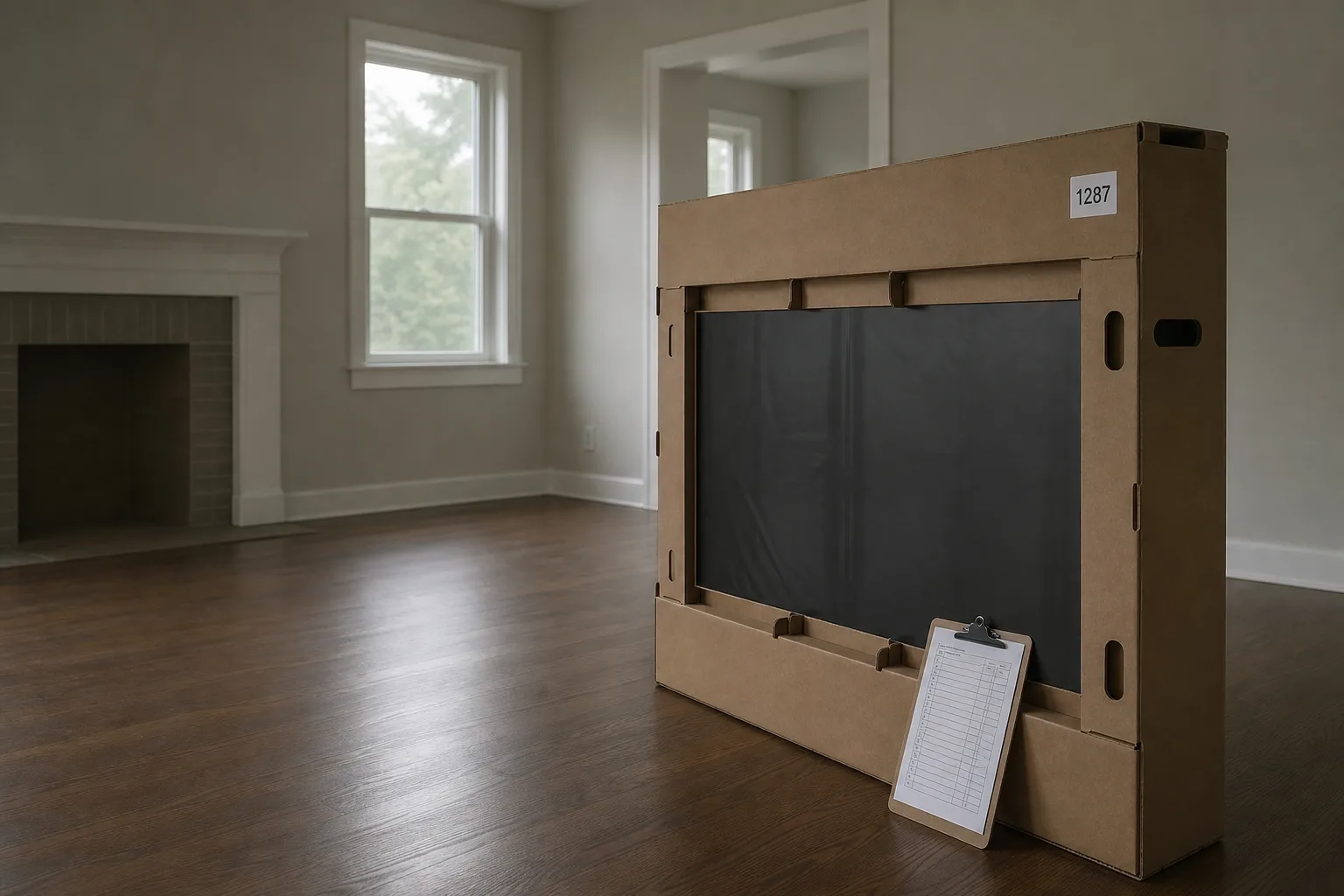 A large flat-screen television standing on end in a custom cardboard moving crate in an empty living room, with a numbered inventory sticker on the carton an...
A 60-inch television weighs somewhere between forty and sixty pounds in its carton, which matters more than the price you paid for it, because the standard liability on an interstate household goods move is calculated by weight and not by value. That single fact reorders every decision you make about how the thing travels. The crew lead who says the company is insured is not lying to you. He is describing a policy that pays the company, on terms that were set before he arrived, and that you agreed to when you signed the estimate.
What "we're insured" is actually pointing at
Interstate movers offer two levels of liability, and the cheaper one is included by default because it costs you nothing. Released value protection settles at sixty cents per pound per article. On a fifty-pound television that is thirty dollars, regardless of what the screen cost or what a replacement costs today. Full value protection is the other tier, priced as a line item, under which the carrier repairs, replaces or pays the current market value of the item. The Federal Motor Carrier Safety Administration oversees this arrangement for interstate moves, and the choice between the two tiers appears on the bill of lading, initialed, usually in a box you passed over in ninety seconds.
Option one: you pack it yourself
This is the cheapest route and the one most people pick when the budget is tight. It is also the one that changes the claim. Cartons packed by the owner are recorded on the inventory as PBO, and the carrier's exposure for what is inside them is narrow: generally it responds only where there is evidence of its own negligence, such as visible crushing, a dropped box, or water damage to the exterior. A screen that arrives cracked inside an intact carton you sealed yourself is very hard to pin on anyone. If you go this way, photograph the television powered on, showing an image, with the serial number legible in a second shot, and photograph the packed carton before it is sealed and again after, with the inventory tag number visible in the frame.
Option two: the crew packs and crates it, still at released value
Carrier packing shifts the presumption. When the mover builds the box, the mover owns the packing job, and a cracked panel inside its own crate is a much shorter argument. Custom TV crates and mirror cartons are billed separately, typically as materials plus packing labor, and on a tight budget this is the single upgrade with the best return, because it costs a fraction of full valuation while removing the defense that most often ends these claims. What it does not do is raise the payout ceiling. Sixty cents per pound is still sixty cents per pound. You have improved your odds of winning a small check, not the size of it.
Option three: paying up the valuation, and where the math turns
Full value protection is priced against the declared value of the whole shipment, with a deductible option that lowers the premium, so it is not something you buy for one television. The honest comparison is between insuring the shipment and self-insuring the two or three items that would actually hurt. If your high-value goods amount to a screen, a laptop and a bicycle, the replacement cost of all three may sit below the premium, in which case the rational move is carrier packing on the fragile items and a deliberate decision to carry the risk yourself. If there is a piano, art, or a tools inventory in the truck, that calculation flips quickly. Write down which items you are choosing not to cover, with values, and date the note.
The record that decides which of the three you actually get
Damage is discovered at delivery, in a driveway, while a crew waits to leave, and that is the worst possible moment to be reconstructing anything from memory. Note every exception on the delivery inventory before you sign, in your own hand, using the item's tag number, and take a photograph of the annotated sheet with your phone rather than relying on being handed a copy. Then unbox the television with the camera running. On interstate moves the written claim window runs nine months from delivery, the carrier must acknowledge within thirty days, and it must pay, decline or make an offer within one hundred twenty days of receiving it. Send the claim by a method that produces a receipt, and keep the tracking record with the photographs in one folder.
The budget version of this is not the version with no protection. It is the version where you pay for carrier packing on the three items that would genuinely sting, accept released value on the rest with your eyes open, and build a file at each step so the account of what happened does not depend on anyone remembering it correctly six weeks later.
Posted under Business & Trade