Just Insured a Ring? Why the Appraisal Expires and Which Provider Notices First
An appraisal is a dated opinion, not a permanent fact, and how your insurer handles that date decides what a replacement check is worth.
Pinned by Miriam Goldfarb5 min read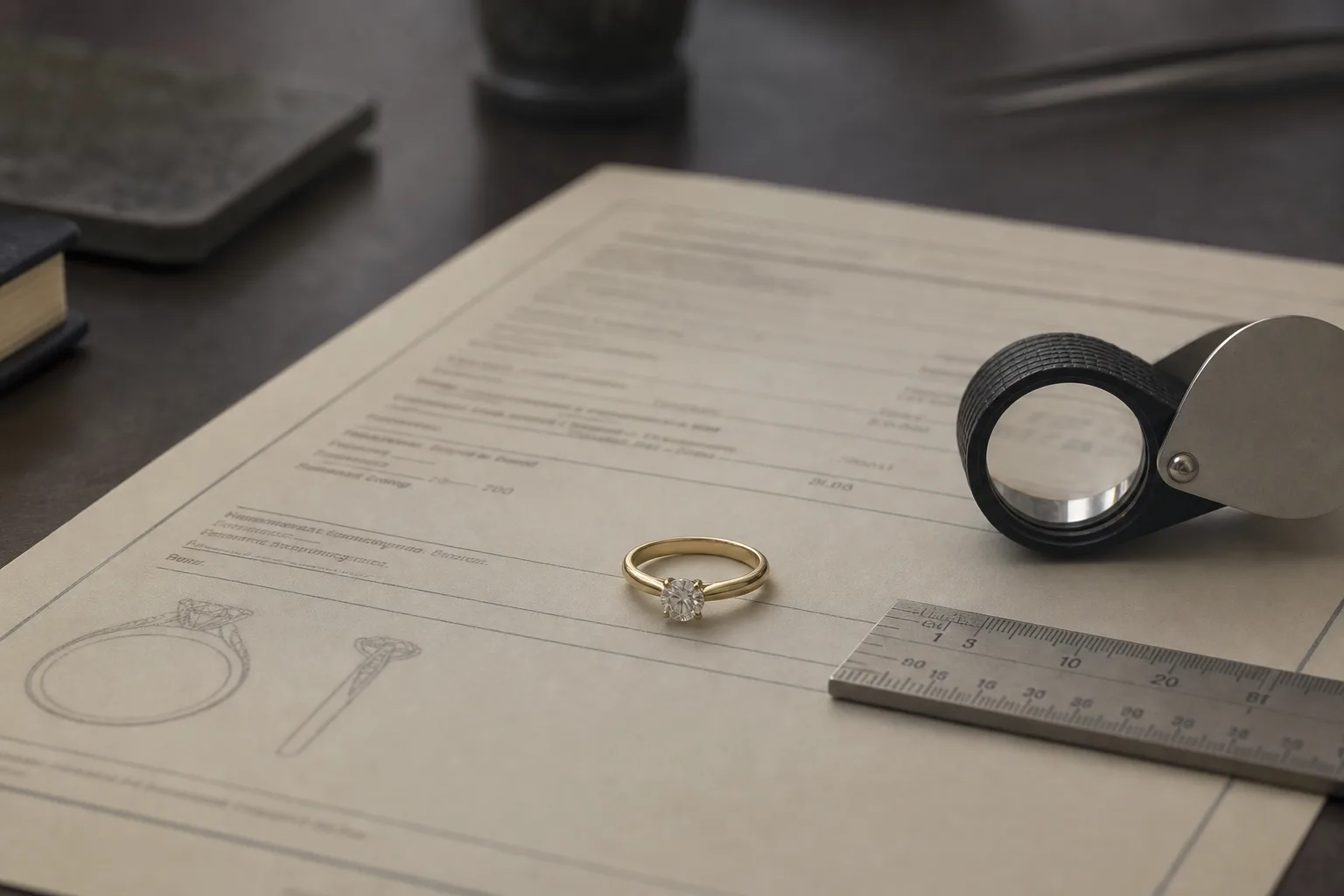 A gold engagement ring with a diamond resting on a printed appraisal document, beside a jeweler's loupe and a small calibrated scale on a desk
The document you paid a hundred and change for, the one with the gemologist's signature and the retail replacement figure at the bottom, is not a certificate of value. It is a dated opinion about what an item would cost to replace in a particular market on a particular day, and the market moves. Gold moves, labor rates move, and the supply of a specific cut or a specific colored stone moves in ways that have nothing to do with your ring. Once you have scheduled the piece, the appraisal becomes the number your claim is measured against, which makes its age a live financial question rather than a filing detail.
What the date on the appraisal is actually doing
Most appraisals for insurance purposes state a replacement cost, meaning what it would take to obtain a comparable item at retail, not what you could sell yours for. That figure rests on assumptions the appraiser held that week: metal prices, stone availability, the going rate for a bench jeweler's hours, the presence or absence of a comparable piece in the secondary market. None of those assumptions were promised to hold. Insurers know this, which is why many of them ask for a fresh appraisal on a schedule, typically every few years, and why some will quietly cap a payout at the appraised amount even when the replacement quote comes back higher.
The practical consequence arrives at claim time and not before. You lose the ring, the insurer authorizes a replacement, and the jeweler's quote for a comparable stone comes in above the number on a document written when gold traded lower. Whether you absorb that gap depends entirely on how the policy was written and how old the valuation was allowed to get. This is a solvable problem, and it is solved months or years ahead of the loss, by treating the appraisal as something with a refresh cadence rather than a permanent record you file once and forget.
Scheduling with a big carrier versus a specialty provider
Your homeowners policy almost certainly covers jewelry already, under a sublimit that is small and that applies specifically to theft. A few thousand dollars is common, and that limit does not care what the ring cost. Scheduling the item, sometimes called a rider or a floater, lifts it out of that sublimit and usually broadens the covered causes of loss to include mysterious disappearance, which is the clause that matters most, because the ordinary way an engagement ring is lost is that it is simply gone. Larger national carriers write these riders routinely, often with no deductible on the scheduled item.
Specialty valuables insurers, the ones that write nothing but jewelry, fine art, and collectibles, tend to differ in three specific ways: they may write agreed value rather than replacement cost, they often accept a broader set of documentation in place of a formal appraisal for lower-value items, and their claims staff handle these losses all day rather than occasionally. A large diversified carrier brings scale, a single point of contact for every policy you hold, and a multi-policy discount that is real money. The specialist brings depth on exactly one problem. Both arrangements work well; they fail in different places, which is what you are actually choosing between.
Reading the reviews for a pattern rather than a grudge
Ratings for insurers are weighted almost entirely by claim experience, and claim experience is weighted almost entirely by whether the customer's expectation matched the policy language. That makes the star average close to useless and the text of the reviews genuinely informative, if you read for structure rather than sentiment. One furious review describing a denial is a data point about that person's paperwork. Nine reviews across three years describing the same procedural friction, appraisals rejected for the same missing element, replacement jewelers assigned without consultation, valuations disputed on the same grounds, is a description of how the company operates.
The specific pattern worth hunting is disagreement about replacement rather than disagreement about coverage. Reviews that say the claim was covered but the customer disliked the substitute stone tell you the insurer controls sourcing and exercises that control, which is neither good nor bad but is something to know before you sign. Reviews that say the payout matched the appraisal exactly, in a year when the appraisal was already old, tell you that carrier does not adjust upward for market movement. Dated complaints matter less than recent ones, because claims departments are reorganized, and a cluster of similar reports inside eighteen months is the signal.
Note also who is writing. A large provider generates enormous review volume, so a handful of bad accounts means very little, while a specialty insurer with a few hundred total customers writing reviews needs to be read differently: there, three consistent reports about the same appraisal requirement carry real weight. Look for reviewers who name the mechanism, the exact wording, the form, the timeline. Those readers were paying attention. The ones describing only how the experience felt are describing themselves.
Building the judgment before you need it
Ask the underwriter, in writing, three questions: how often a fresh appraisal is required to keep the scheduled value in force, whether the payout is capped at the appraised figure or set by the actual replacement cost at the time of loss, and who selects the replacement jeweler. The answers vary meaningfully between providers and rarely appear in the marketing copy. Then photograph everything, the piece from several angles, the hallmarks, the receipt, the appraisal itself, and store those copies somewhere that is not the house holding the jewelry. The Federal Trade Commission oversees how jewelry is described and advertised to consumers, and the vocabulary in its jewelry guides is the same vocabulary a good appraisal uses, which is one reason a specific, well-drafted appraisal survives scrutiny that a vague one does not.
Set a calendar reminder for the refresh, two or three years out, sooner if metal prices have moved sharply or you have added pieces. An updated appraisal usually costs less than the annual premium on the item, and it converts the one variable you control into a known quantity. Most people find the second appraisal comes back higher than the first, which means the coverage limit was quietly lagging the value the whole time and the fix took an afternoon.
The appraisal expires because markets change and the document cannot. Once you have accepted that, the whole decision becomes a maintenance question, and maintenance questions have straightforward answers: know the refresh interval your provider requires, know whether your payout follows the paper or the market, and keep the documentation somewhere a fire cannot reach it.
Posted under Money & Finance