Insuring a Ring Ten Years On, and Why the Old Appraisal No Longer Covers It
Scheduling jewelry today asks for more documentation than it did a decade ago, and the appraisal in your folder has a shelf life the policy is quietly counting down.
Pinned by Josephine Lachance4 min read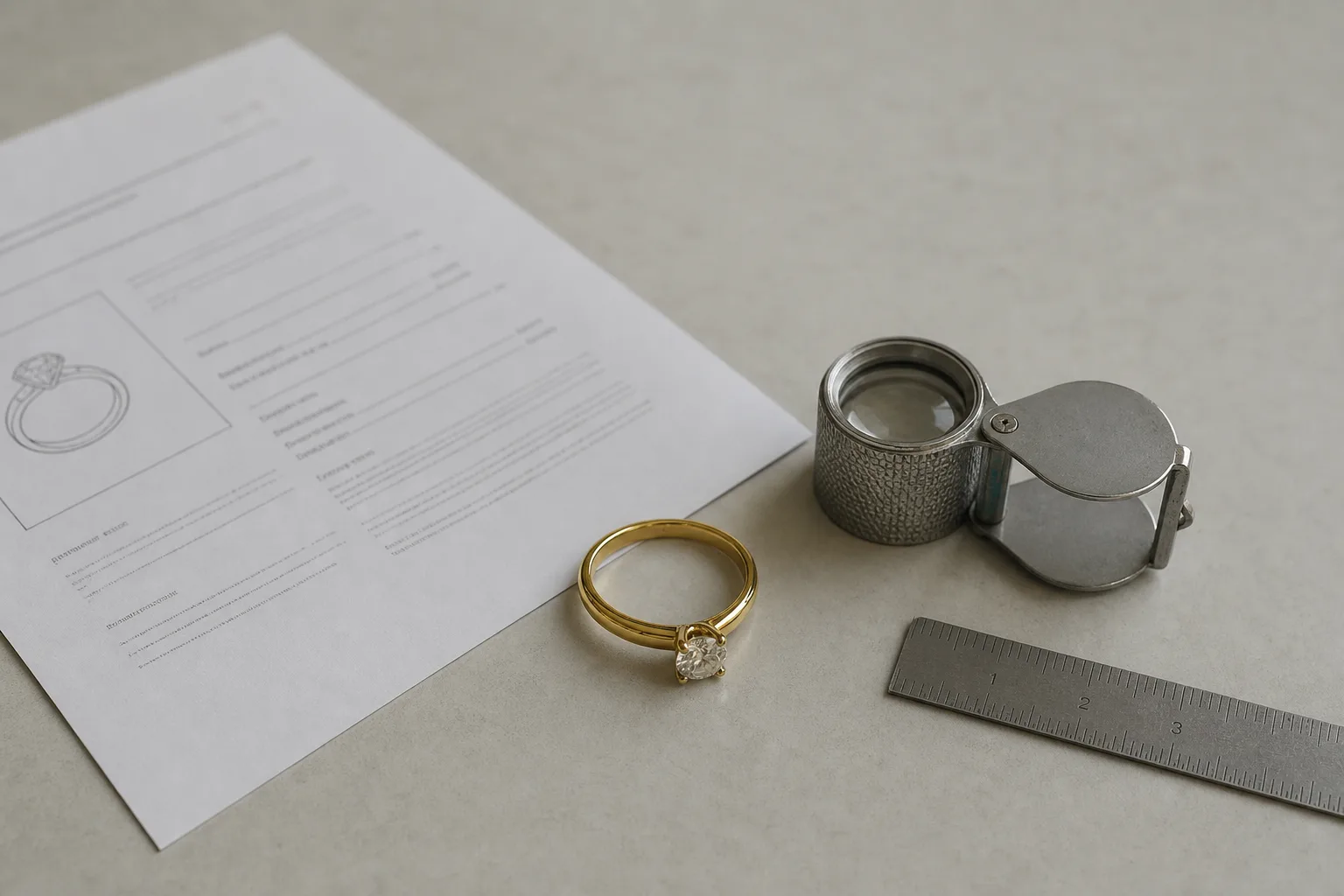 A gold ring with a single diamond resting beside a printed appraisal document, a jeweler's loupe, and a small metal ruler on a plain surface
The folder in the filing cabinet usually tells the story. A typed appraisal from a retail jeweler, one page, a total dollar figure at the bottom, maybe a photocopied receipt stapled behind it, and a policy declaration page listing the item as scheduled at that value. That combination was enough to bind coverage a decade ago and, for many households, it has never been touched since. The item is still insured. What it is insured for, and what the carrier will ask you to prove at a loss, have both moved considerably since the paperwork was signed.
The 2015 folder against the 2025 request
Ten years ago, scheduling a piece of jewelry was largely a conversation. You told an agent the item, gave a value, sent whatever document you had, and the endorsement appeared on the renewal. Today the intake is more structured: carriers and their appraisal partners want the gemological detail spelled out, the metal weight and karat stated, the stone measurements and cut grade recorded, and photographs that show the piece from more than one angle. Some want the laboratory report number for a graded diamond. The underwriting question shifted from what is it worth to what exactly is it.
That shift is not bureaucratic for its own sake. A one-line valuation cannot be reconstructed after the piece is gone, which is precisely when the number matters most. If the appraisal says nothing about whether the center stone was a 1.2 carat round of near-colorless grade or a treated stone of similar size, the adjuster is left choosing a replacement from a description that does not narrow the field. The detailed intake exists so that a replacement can actually be sourced, rather than negotiated from memory and a blurry photo taken at a wedding.
Why the appraisal has a countdown on it
An appraisal is a snapshot of a market on a given date, not a permanent statement of value, and most carriers treat it as stale somewhere in the three to five year range. Metal prices move, stone pricing moves by grade and shape independently, labor and setting costs move with the rest of the trade, and a design that was widely available when the piece was bought may no longer be made. When a scheduled value is old, the gap runs in whichever direction the market went, which means either you are paying premium on a figure the market has passed or you are insured well below what a replacement now costs.
The practical consequence appears at the claim, not the renewal. A scheduled item is typically covered up to the amount on the schedule, so an outdated figure caps the payout regardless of how long you carried the coverage. The fix is unglamorous and takes an afternoon: a current appraisal from a qualified independent appraiser, sent to the agent in writing, with the endorsement reissued at the new figure. Ask for the updated declaration page back, and read the item line to confirm the number changed.
The week-to-week reality the paperwork ignores
Coverage assumes a static object, and jewelry that gets worn is not static. Prongs loosen, a ring is sized twice across a decade, a clasp is replaced with a different one, a stone is swapped after a chip, a bracelet spends four months in a drawer and then travels internationally in a carry-on. Each of those is a small change to the insured item, and several of them change either its value or the accuracy of the description on file. None of them generates a document unless you generate one.
This is where a habit beats a policy review. Keep the jeweler's work order every time a piece goes in for repair or sizing, photograph the piece before it leaves your hands and after it comes back, and note the date. Six-month prong checks are a maintenance item, and the receipt for one is also evidence the piece was cared for if a stone is later lost. The Federal Trade Commission oversees how jewelry is described and advertised in the United States, which is part of why the language on a modern appraisal is more specific than the language on an older one.
What to write down and what to send
Build a single record per item and keep it where a fire would not reach it. It should hold the original purchase receipt, the current appraisal with the appraiser's credentials and the effective date, any laboratory report, photographs against a plain background with a ruler in frame, and the repair history in date order. Add the current declaration page showing the scheduled value. Then send the appraisal to your agent by email rather than by phone, and keep the reply, because a value you discussed and a value on the endorsement are different things.
The account of a lost piece is only as good as what was recorded while it still existed. Households that update the appraisal on a set cycle, photograph after every repair, and confirm the endorsement in writing find that the claim becomes a matter of producing a file rather than reconstructing a decade.
Posted under Money & Finance