Insured the Ring Five Years Ago? Why the Appraisal Expired and the Premium Moved
What a scheduled jewelry premium is actually priced on, why appraisals go stale faster than they used to, and how the update job grows once the insurer starts asking.
Pinned by Ravi Chandrasekar4 min read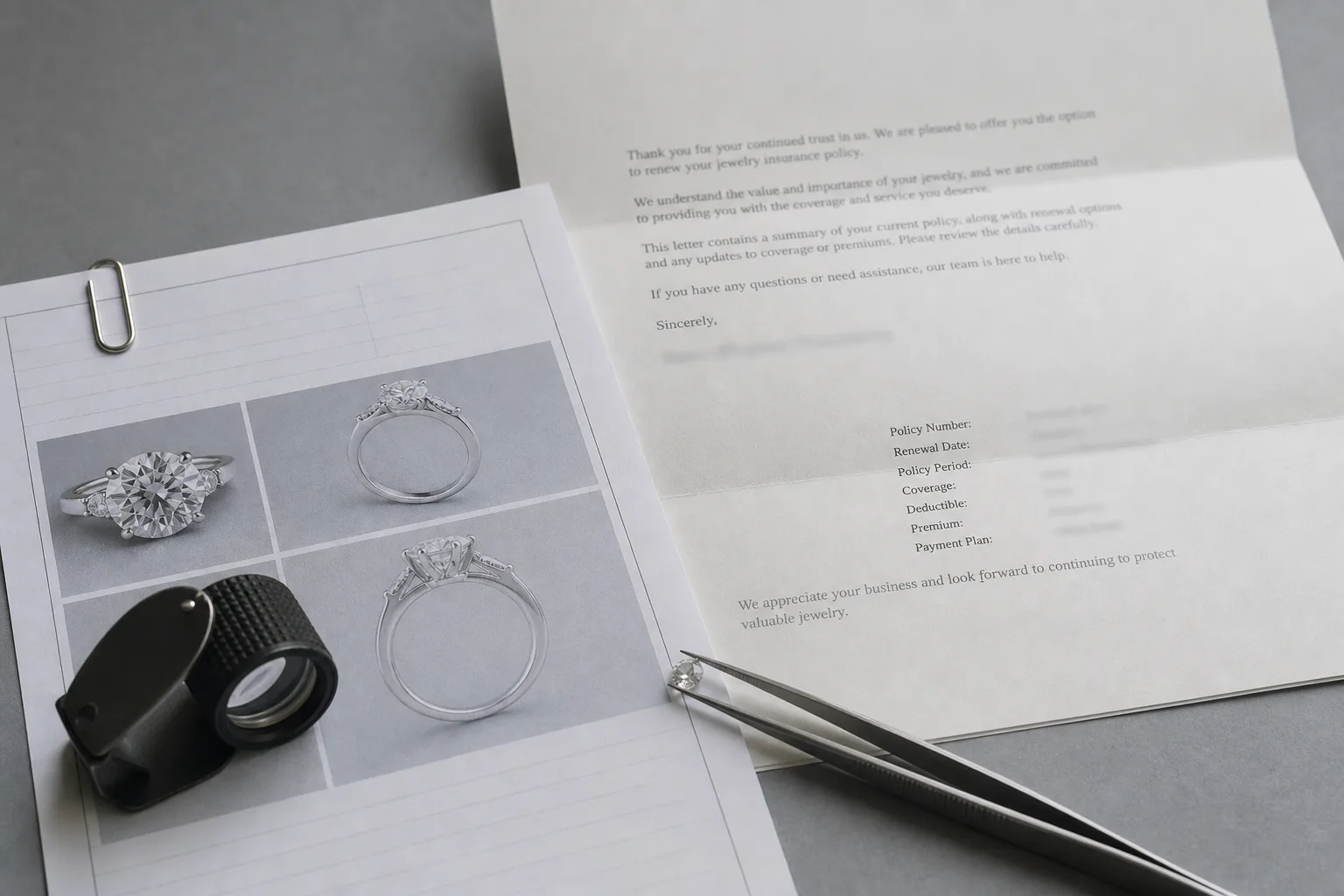 A jeweler's loupe, a printed appraisal document with photographs of rings clipped to it, and a diamond tweezers resting on a gray desk beside an open insuran...
A scheduled item on a homeowners policy is one of the few places where you pay for a number you supplied yourself. The insurer accepted your appraisal, wrote the value onto a rider, and charged a rate against it. Nothing about that arrangement updates on its own. Years later the metal is worth more, the stone market has moved in the other direction, and the document that set the whole thing in motion describes a replacement cost that no longer exists. The premium and the payout both trace back to that page.
What the premium is actually priced on
Scheduled coverage is quoted as a rate applied to the insured value, expressed per hundred dollars, which means the appraisal figure drives the bill directly. Raise the value and the premium rises with it, in a straight line, with no deductible cushion in most riders. What moves the rate itself is narrower than people expect: the type of item, whether it is worn daily or stored, the ZIP code where it sits, and sometimes whether a safe is involved. Watches and loose stones often price differently from mounted jewelry, because the loss patterns differ.
The second lever is the valuation basis, and it decides more than the rate does. Agreed value pays the scheduled figure, without argument, when the item is gone. Replacement cost pays what it takes to replace the item with one of like kind and quality, which can land below your schedule if the market has softened. Ask which one your rider uses before you touch the value, because updating an appraisal under a replacement cost basis can raise your premium without raising a single dollar of what you would actually collect.
Why an appraisal has a shelf life now
An appraisal is a snapshot of a replacement market on a specific date, and the two halves of that market have recently moved in opposite directions. Precious metal prices climbed hard enough that the gold content in an older piece can outweigh the setting labor it was priced on. Meanwhile the diamond side absorbed the arrival of lab-grown stones at scale, which pulled retail comparables for some sizes and grades downward. A 2018 document reflects neither event. That is why insurers that once suggested a refresh every five years now often want three, or two.
There is a procedural reason as well as a market one. Carriers reprice books of scheduled business when their own replacement experience stops matching the schedules they hold, and the cleanest way to fix a stale schedule is to ask the policyholder for current paper. The request usually arrives at renewal, phrased as a condition rather than a suggestion. The Federal Trade Commission oversees how jewelry is described and advertised in the United States, and the same descriptive terms that govern a sales tag, treatment disclosure, origin, stone type, are what a current appraisal is expected to state plainly.
Where the appraisal job grows, and who asked
Appraisers charge for time, typically hourly or per item, and the estimate you get on the phone assumes a straightforward examination. Then the scope moves. The insurer wants each piece described separately rather than as a group, so a four-item visit becomes four reports. It wants photographs adequate for identification. It wants a laboratory report for anything above a size threshold, which means the stone leaves your possession, travels, waits in a queue, and comes back with its own invoice. None of that was in the first quote, and none of it was the appraiser's idea.
Get the requirement in writing from the carrier before you book, and hand it to the appraiser as the scope of work. That single step converts a vague errand into a defined job with a defined price. Ask directly whether grading reports are required or merely preferred, because preferred is optional and costs real money. Ask whether the insurer accepts an appraisal from any credentialed independent appraiser or restricts it to a panel. Ask who pays if the carrier rejects the format, and settle that question while it is still hypothetical.
Doing the update once instead of twice
Handle the whole schedule in a single engagement rather than one item at a time, since travel and setup are charged once and examination time is the marginal cost. Bring original receipts, prior appraisals, service records and any lab reports you already hold, because verified history shortens the work. Expect some values to fall, and let them: a lower schedule on a softened stone reduces premium without touching what a replacement cost rider would pay. Then calendar the next refresh yourself, at the interval your carrier states, rather than waiting for the renewal notice to raise it.
The paper is the asset. Keep the report, the photographs and the lab documents somewhere that survives the loss of the house, and send the carrier the version it asked for, in the format it asked for, on the date it asked for. A schedule maintained that way pays without a negotiation.
Posted under Money & Finance