First Dispute? The Offer on the Table Is Not What Tells You When to Settle
The first settlement offer feels like a math problem, but the decision is driven by the state of your record, the priced cost of the next step, and what the release closes.
Pinned by Josephine Lachance4 min read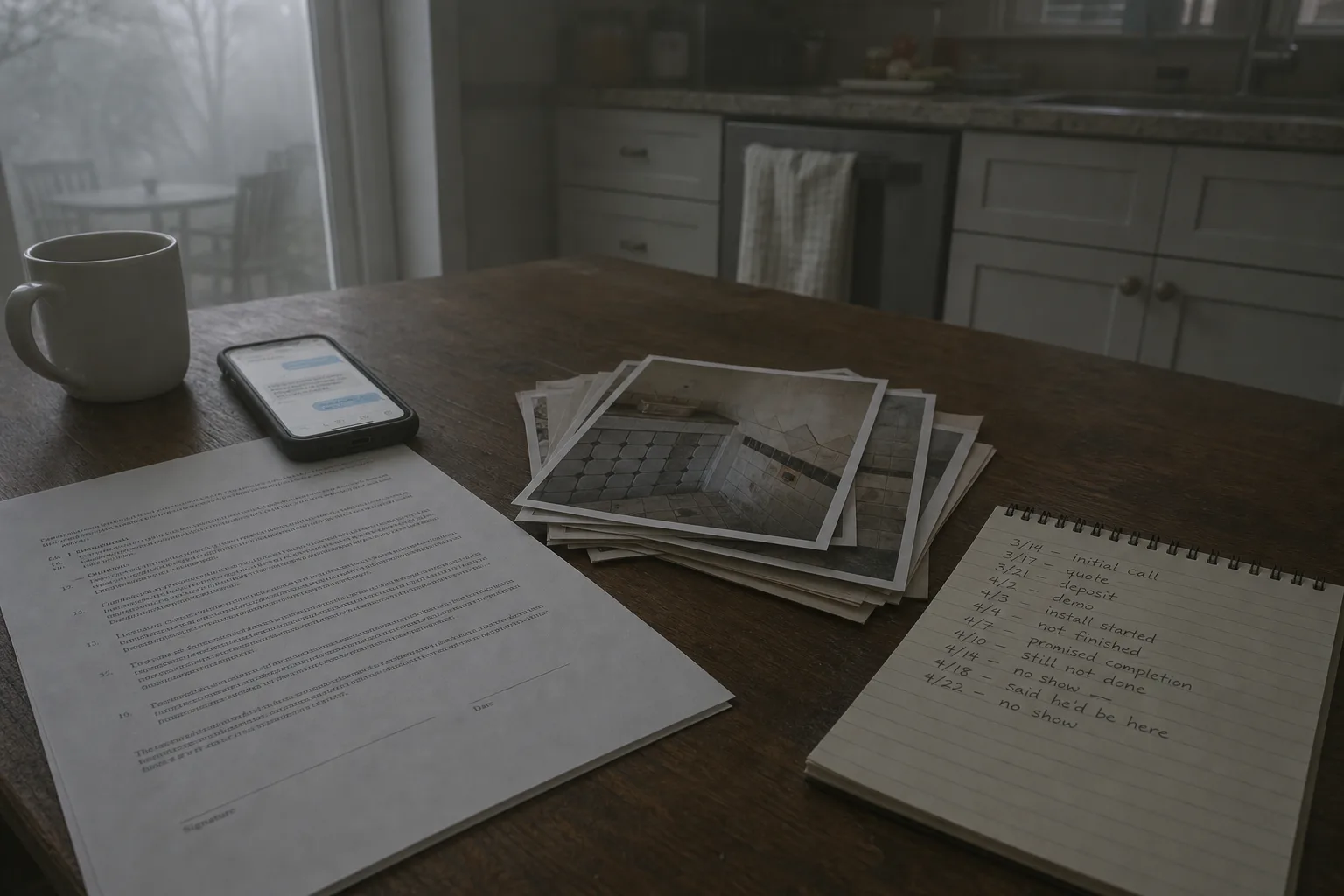 A kitchen table covered with a printed contract, a stack of dated photographs of tile work, a phone showing a text thread, and a handwritten notepad listing...
The first offer usually arrives in a short email, often from someone you have not dealt with before, and it names a figure that is neither insulting nor satisfying. Forty percent of what you asked for, maybe half, with a sentence about wanting to put this behind everyone. If this is your first dispute, the instinct is to treat that number as the whole question: is it enough, is it fair, could you get more. That instinct is why so many first-timers either accept too early or refuse an offer they will never see again.
The assumption that a number decides it
Most people going through this once believe settling is arithmetic. You compare the offer against the loss, you apply some private discount for the hassle, and when the two numbers get close enough you sign. It feels rational, and it is the wrong frame, because the offer is the only variable in the dispute that the other side controls completely. They set it based on what they think you can prove, what continuing would cost them, and how much of the season they want to spend on you. Your own answer has to be built from the things you control.
There are three of those, and none is the figure in the email. The first is the condition of your record, meaning what you can actually put in front of a third party. The second is the priced cost of the next step, not the imagined cost. The third is what the release language closes off, which is usually more than the dispute you are having. First-timers tend to spend their energy on the number and almost none on these, and the number is the input that matters least.
What your file says before you say anything
Open everything you have and sort it by date, not by importance. You are looking for a specific thing: whether a stranger reading the folder cold would understand what was promised, what was delivered, when you objected, and what the other side said back. Photographs with timestamps, the original written scope, the change order you approved by text, the email where you flagged the grout color and got no reply for nine days. That sequence is your leverage, and it is either in the file or it is not.
Where the file is thin, it can often still be thickened, and this is the part first-timers skip. If a conversation happened on the phone, write a same-day email summarizing it and send it to the person you spoke with: dates, what they said, what they agreed to check. If a defect is still visible, photograph it again with something in frame for scale and keep the original image files rather than screenshots. If an inspector, plumber, or second contractor has looked at the work, ask for a short written statement of what they observed, not an opinion about fault. A settlement judgment made on a documented file is a different decision from one made on memory.
Pricing the next step instead of imagining it
The reason to keep going is that the next step is worth more than it costs, and you cannot know that until you have asked what the next step actually is. Small claims court in your county has a filing fee, a dollar limit, and a published process that does not require an attorney. An attorney will quote you for a demand letter, which is a fixed and often modest number, separately from representation, which is not. A licensing board complaint costs nothing but takes months and produces discipline rather than money. The Federal Trade Commission oversees consumer complaint reporting, and a complaint there builds a record without resolving your individual loss.
Write those numbers down next to the offer, with the hours each path takes and the time you would take off work. Then the comparison becomes real. An offer worth sixty percent of your loss, available now, against a documented claim for the full amount that costs a filing fee, two mornings, and eleven weeks, is a decision a person can make. The same offer against a vague sense that you could probably do better is not a decision, it is a mood, and moods are what settlement deadlines are written to exploit.
What the release closes, and how to narrow it
The signature page is where first-time claimants lose money they did not know was on the table. Most settlement documents release all claims arising from the project, not the one item you argued about, which means the tile you settled over and the subfloor you have not yet discovered both go quiet on the same day. Read for the scope of the release and the date it runs to. Ask in writing for the release to be limited to the identified defects, and ask whether any warranty on the remaining work survives it. Both requests are routine, and both are frequently granted when they are put plainly.
Then get the settlement itself into the same record you have been building. The agreed amount, the payment date, the method, who repairs what and by when, what happens if the repair fails inspection, and the confirmation that your warranty continues. Send your own written summary the same day and ask them to confirm it. If the money arrives late or the repair goes wrong, that confirmed summary is the document that makes the second conversation short.
Settling well is not a concession, and it is rarely a matter of nerve. It is what becomes available once you know what your file proves, what the next step costs in dollars and mornings, and exactly which claims your signature puts to rest.
Posted under Law & Legal