Buying a Gift Worth More Than It Looks? Ask These Questions Before the Box Is Wrapped
A December jewelry purchase rarely ends at the price agreed at the counter, and the sizing, the paperwork and the return window all move after you say yes.
Pinned by Ravi Chandrasekar4 min read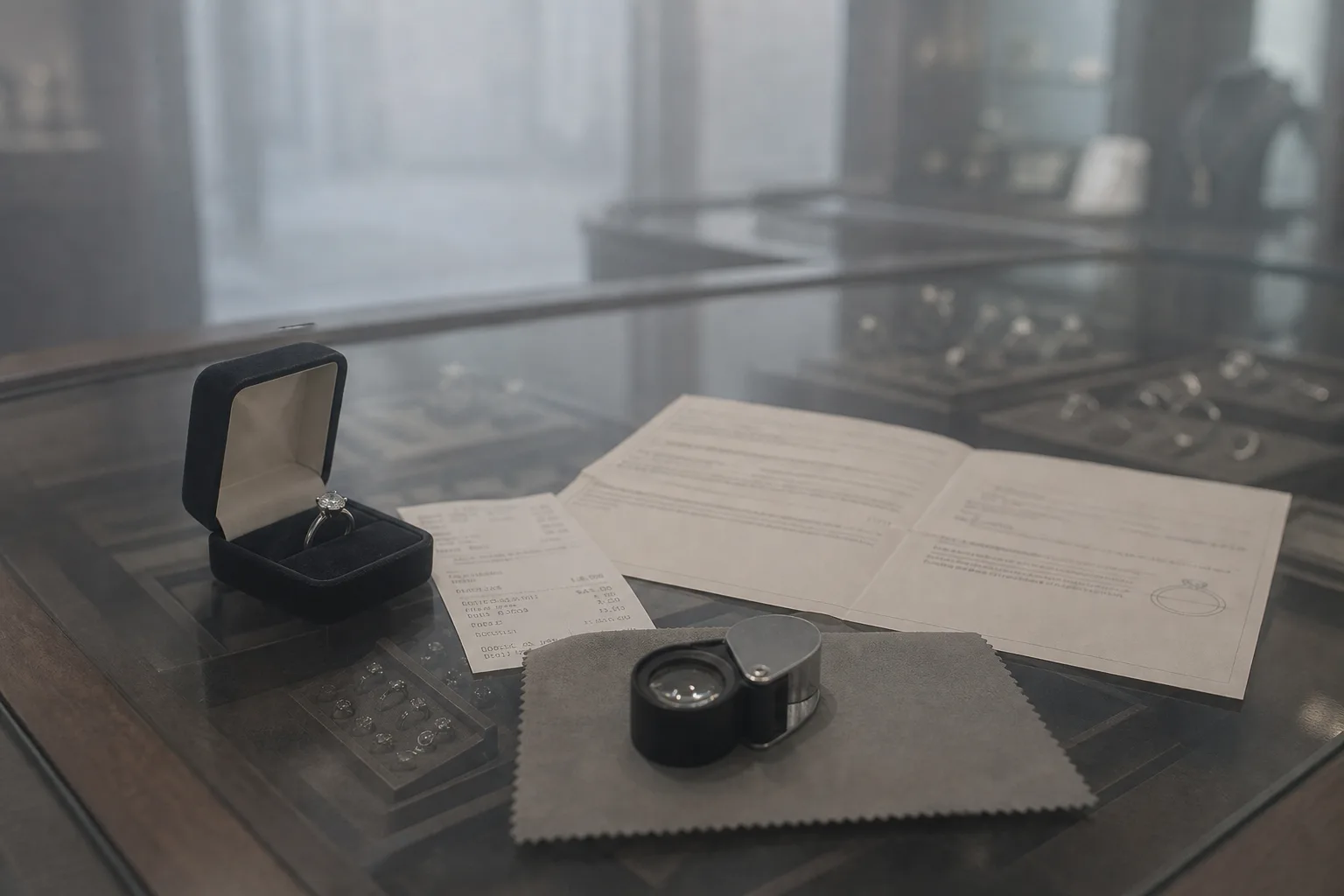 A jeweler's counter with a small ring box open beside a printed receipt, a folded appraisal document and a loupe resting on a cloth pad
The number on the tag is the smallest part of what a jewelry purchase eventually costs a household, and December is the month when that gap opens widest. Between the day you agree a price and the day the piece is insured, sized and actually worn, a handful of separate transactions attach themselves to the original one, each with its own fee, its own timeline and its own opinion about who agreed to it. None of them are hidden. They are simply discussed later, usually by a different person, often after the return window has quietly closed behind you.
The receipt is not a description of what you bought
Most buyers assume the sales receipt establishes what the piece is: metal, stone, weight, origin. It rarely does. A typical receipt records a price, a store, a date and a short line of text written for inventory purposes, not for an insurer or a future buyer. The document that describes the item, with measurements, grading notes and a stated replacement value, is a separate appraisal, and it is a separate charge in most stores. The Federal Trade Commission oversees how jewelry is described and advertised to consumers, which is why the counter language and the appraisal language often differ so precisely.
Ask, before you pay, whether an appraisal is included, what it costs if not, and how long it takes. In the first three weeks of December the honest answer at many independent jewelers is that the appraiser comes in on certain days and the queue is long. That is a scheduling fact, not an obstacle, and it is solved by asking for a written estimate of the piece with the sale, then scheduling the formal appraisal for January when the bench is clear.
What the season actually changes
Seasonal pressure does not change the price of gold or the quality of a setting. It changes the sequence. Bench jewelers who would normally size a ring in four days are working through a queue that is three or four times its usual depth, so the store starts offering the piece as-is with sizing to follow in January. That sounds harmless. It matters because a great many return policies distinguish between an unaltered item and one that has been to the bench, and an item sized after the holiday counts as altered from the day the work is done, not the day it was bought.
The second seasonal shift is who you are speaking to. December counters are staffed with temporary help, entirely competent at selling but not always authorized to make commitments about resizing, engraving removal or extended returns. A promise made in good faith by someone who will not be there in February is not a promise the store recognizes. Get the specific terms written on the receipt or an emailed order confirmation, with a name attached, and the commitment survives the staffing change intact.
Where the scope grows after the price is agreed
The pattern is consistent enough to plan for. A ring is bought at one number, then sized, which is either free once or charged by the millimeter depending on the store. Then the setting needs tightening because the size change moved the shank. Then white gold needs rhodium plating, which is a maintenance item every year or two rather than a defect. Then there is an appraisal fee, then an insurance rider, then possibly shipping and signature delivery if the piece came from elsewhere. Each item is small. Together they routinely add a meaningful percentage to the original figure.
The question that controls all of this is asked once, at the counter, before the card comes out: which of these is included in the price we just agreed, and which will be billed separately. Ask it as a list and ask for the answer in writing. A store that handles volume well will answer it in under a minute, because the answer is standardized, and you will have converted an open-ended series of small future charges into a single known number you can decide about now.
Insurance is a third document, and it has its own clock
A homeowners or renters policy typically covers jewelry only up to a modest sublimit for theft, well below what a significant piece is worth, which is why scheduling it as a listed item on a rider exists. The rider needs the appraisal, and the appraisal needs the bench work to be finished, so a piece bought on December twentieth and sized in mid-January may not be properly scheduled until February. Ask your agent whether newly acquired valuables are covered automatically for a set number of days after purchase. Many policies do this, and knowing the length of that window tells you exactly how much time the paperwork actually has.
The four questions that settle the rest
Ask what the return window is and whether sizing ends it. Ask who performs the bench work, in-house or sent out, because a piece mailed to a third-party shop is out of your hands for longer and is insured under someone else's terms in transit. Ask what the appraisal costs and when it can be scheduled. Ask what the written warranty covers, specifically whether it survives service work done anywhere else, since a routine cleaning at a different store can void coverage in some agreements. Four questions, all answerable at the counter, all cheaper asked than discovered.
A jewelry purchase behaves like any other job that starts with an agreed figure and then acquires additions. The additions are legitimate, the people asking for them are usually right that the work is needed, and the only real variable is whether you priced them in December or found out about them in March.
Posted under Money & Finance